DIY Interior Painting Guide for New Homeowners: Prep, Tools, Techniques & Common Mistakes to Avoid
Picture this: keys in hand, boxes half-unpacked, staring at builder-beige walls that scream "temporary." Your new home demands personality, and nothing stamps your claim faster than a fresh coat of paint. But here's the truth—DIY painting isn't about channeling Bob Ross. It's a calculated strike: prep like a surgeon, tools that punch above their weight, techniques that deliver pro edges without the pro bill. For first-time homeowners, this is your rite of passage in home improvement. Nail it, and every wall whispers competence. Botch it? Streaks and regrets.
We'll cut through the noise with interior painting tips that stick: surface prep that grips paint like glue, new homeowner tools worth the drawer space, and pitfalls that turn rookies into veterans. No fluff. Just the moves to make your space yours.
Surface Prep: The Unsung Hero of Flawless Finishes
Skip prep, and your paint job peels faster than cheap wallpaper. Start with a deep clean: TSP substitute or mild detergent wipes grease from kitchen walls, nicotine ghosts from old rentals. Patch drywall dings with lightweight spackle—sand smooth with 220-grit once dry, no orange-peel texture allowed.
Prime everything. New drywall? Killer. Glossy old paint? Double killer without primer. Roll on a flat latex primer, let it cure 24 hours. Taping seals the deal: painter's tape, not masking. Press edges with a putty knife for zero bleed. Pro trick: paint the tape's edge first with base color, let dry, then topcoat. FrogTape's painted surface lines? Gold for crisp reveals.
Taping Techniques That Don't Fail
- Run tape floor-to-ceiling in 3-foot vertical strips for straight lines.
- Seal with base paint; it shrinks tape gaps.
- Remove at 50% dry—wet paint loves to tear.
Tools That Matter: Brushes, Rollers, or Paint Sprayer?
Your arsenal sets the pace. Angled sash brushes (2-2.5 inch, synthetic bristles) cut in edges like a scalpel—no ladders wobbling. Rollers? 3/8-inch nap microfiber for smooth walls, 1/2-inch for textured. Load light; drip pans save floors.
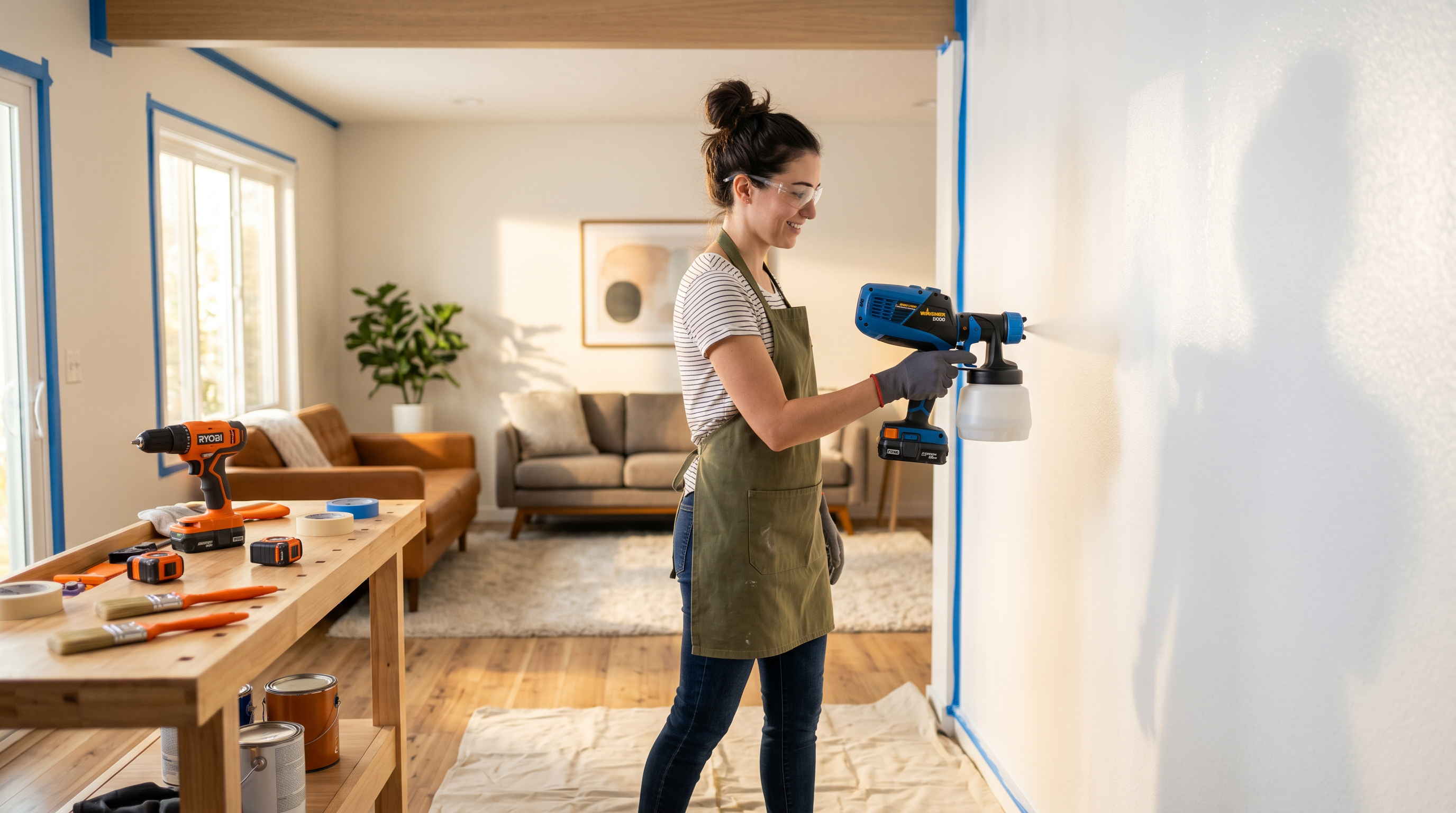
Enter the paint sprayer: game-changer for DIY painting speed and satin finishes. Cordless models cut cords and fatigue—overspray's the trade-off, so mask like Fort Knox. Weigh it: brushes for trim, rollers for flats, sprayer for volume. Stock up on new homeowner tools: drop cloths, extenders, 5-gallon buckets with grids.
Paint Sprayer vs. Traditional: Quick Breakdown
- Sprayer: Even coats, 4x faster, pro sheen. Thin paint 10-20%.
- Roller: Control on details, no mist. W-pattern rules.
- Brush: Precision edges. Offload excess on grid.
Techniques for Clean Edges, Even Coats, and Zero Drama
Cut in first: 2-inch band around ceilings, trim, corners. Feather out. Roll wet-on-wet: broad W's from top down, 3x3-foot sections. Roll up, then cross down—no holidays (missed spots). Two thin coats beat one thick; wait 2-4 hours between, 24 for full cure.
Temperature: 50-85°F, low humidity. Stir, don't shake—bubbles ruin. Back-roll sprayer work for texture lock-in. Step back every 10 minutes; fresh eyes catch drips.
Common Mistakes Newbies Make (And How to Dodge Them)
- Overloading tools: Brush/roller rivers streak. Tap off excess.
- Rushing coats: Tacky paint traps dust. Patience pays.
- Poor ventilation: Fumes linger. Fans + open windows.
- Tape tears: Score with blade, pull slow at angle.
- No primer: Uneven absorption, flashing. Always.
These aren't gotchas—they're avoidable with method. Your walls deserve it.
Cleanup: End Strong, No Regrets
Warm soapy water dissolves latex fast. Brushes: conditioner soak, comb bristles straight. Rollers: spin in bucket, rinse, air dry. Sprayer: flush with water, then solvent for oils. Dispose rags in water-filled bags—spontaneous combustion's real. A rotating cleaning brush from starter kits scrubs tools spotless.
Gear Up: The New Homeowner Starter Kit Edge
Tired of mismatched gear? Musthavit.ai's New Homeowner Starter Kit bundles essentials: cordless paint sprayer for effortless coverage, rotating cleaning brush for post-job sanity, workshop power strip to juice it all. Perfect launchpad for home improvement without the hunt.
There it is—no contractor quotes, just walls that turn heads. Your first DIY painting gig isn't just paint; it's proof you own the place. Grab the tools, respect the prep, and watch bland fade to bold. Next up: the rest of the house.